






How to Write an RFQ for AI-Powered Inspection and Vision-Guided Robotics
 By System Admin
3 months ago
By System Admin
3 months ago

Many AI automation projects become expensive not because the technology is weak, but because the RFQ is vague. Buyers may write that they need defect detection, smart picking, or automated inspection, yet leave out the conditions that determine whether the model will work in a production environment. The supplier then fills those gaps with assumptions, and the quotation becomes difficult to compare with alternatives.
A better RFQ turns an AI automation request into an executable sourcing brief. It tells suppliers what has to be detected, how stable the upstream process is, what counts as a pass or fail, and which operational limits cannot be compromised. That level of clarity is especially important when robotic guidance, machine vision, or adaptive inspection is part of the solution.
Start With The Production Problem, Not The Tool Name
The strongest RFQs begin by describing the business problem in operational language. Buyers should explain the product family, the process step, the quality or handling failure that needs to be solved, and the cost of getting it wrong. This helps suppliers decide whether the project is truly an AI use case or whether a simpler rule-based, fixture-based, or conventional automation approach would be more reliable.
For example, a robot-guidance project should define how parts arrive, how often orientation changes, what surfaces create glare, and whether the system must handle unknown part combinations. An inspection project should state the defect categories, defect frequency, current inspection method, and what yield impact matters commercially.
Include The Variables That Usually Break Pilot Assumptions
- SKU range and how often new variants are introduced
- Line speed, takt time, and acceptable latency
- Lighting instability, reflective surfaces, dust, and vibration
- Expected defect classes and edge cases already known internally
- Whether the system must operate across shifts, sites, or operators
When these factors are missing, suppliers often quote a technically possible system that may not survive real production variability. Good buyers therefore include as much operating context as they can, even when they are still refining the final specification.
Ask For Commercial Clarity On Data And Support
AI-enabled systems require buyers to ask more detailed commercial questions than conventional equipment usually does. Who collects sample images? Is annotation included? What happens when the first production run exposes new edge cases? Will retraining be billed separately or included in a stabilization window? These questions determine the total cost of ownership more than a low entry quotation does.
Buyers should also request a clear acceptance framework. A supplier should explain how model accuracy, false reject rate, uptime, and tuning obligations will be measured during FAT, SAT, and early production. If those metrics are left informal, disputes become much more likely during commissioning.
Define Handover Expectations Early
Many AI projects work during supplier-led setup but become hard to maintain after handover. That is why the RFQ should ask for documentation scope, operator training, model-version traceability, alarm guidance, and escalation process. Buyers should understand whether their own teams will be able to adjust tolerances, approve data updates, and identify drift without waiting for a specialist every time the line changes.
A strong RFQ does not need to be excessively long. It only needs to be structured enough that suppliers respond to the same problem definition. Once that happens, comparison becomes more objective, and the buyer can separate serious industrial partners from vendors selling attractive but incomplete concepts.
Featured Products
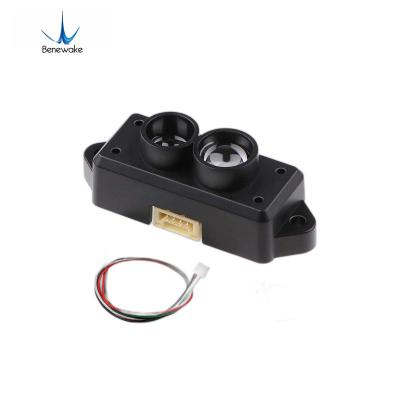
Benewake TFmini-S LiDAR
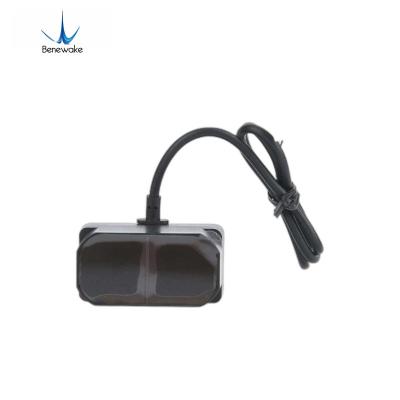
Benewake TFMini-Plus LiDAR
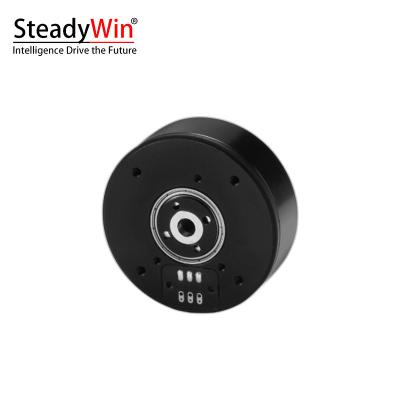
SteadyWin GB4310 Motor