






Why AI-Ready Controllers and Data Logs Are Becoming Procurement Requirements
 By System Admin
5 days ago
By System Admin
5 days ago
More robotics buyers are asking controller questions earlier in the procurement cycle because AI and software-driven optimization depend on usable operational data. A robot arm may meet payload and reach requirements, but if the controller environment is difficult to integrate, hard to log, or closed to future software workflows, the equipment may become a constraint long before its mechanical life is over.
This is a meaningful market change. In previous buying cycles, the controller was often treated as part of the machine package. Today it is increasingly viewed as infrastructure. Buyers want to know whether the platform can support richer diagnostics, event history, traceability, external analytics, and integration with vision, MES, or fleet-management layers. That expectation is moving from large enterprises into mid-market procurement as well.
Why Data Logs Now Matter Commercially
Once AI-assisted maintenance, process optimization, or quality review enters the picture, the controller becomes a data source rather than a closed box. Buyers need access to cycle events, alarms, state changes, job history, and integration status in a form that plant and software teams can actually use. If that data is fragmented or difficult to export, later digitalization projects become slower and more expensive.
For suppliers, this means quotations that used to win on mechanical specification alone now face deeper scrutiny. Buyers increasingly compare controller openness, fieldbus support, API options, backup workflow, and software tooling. A supplier that can explain these items clearly often has a stronger commercial position than one that only highlights motion performance.
What Buyers Should Ask During Evaluation
- What event and alarm history is available without custom development
- How the controller exchanges data with PLCs, MES, and vision systems
- Whether backups, restores, and version control are practical for plant teams
- What remote diagnostics and service tooling are supported
- How easily the platform can scale when additional sensors or AI applications are added
AI-Ready Does Not Mean Over-Engineered
Buyers should not confuse AI readiness with unnecessary software complexity. The objective is not to purchase an oversized platform for hypothetical use cases. The objective is to avoid locking a productive asset into a controller environment that becomes expensive to connect, diagnose, or extend later. Practical openness and disciplined documentation are usually more valuable than a long feature list.
As a result, the procurement conversation is widening. The strongest automation suppliers are those that can explain both the machine and the software lifecycle around it. In a market where robotics systems increasingly feed broader digital operations, that capability is becoming a genuine buying criterion rather than a nice extra.
Featured Products
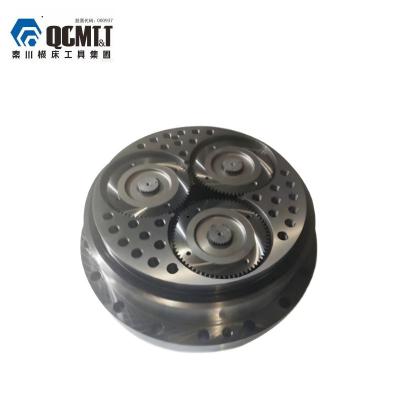
Qinchuan BX700F Reducer
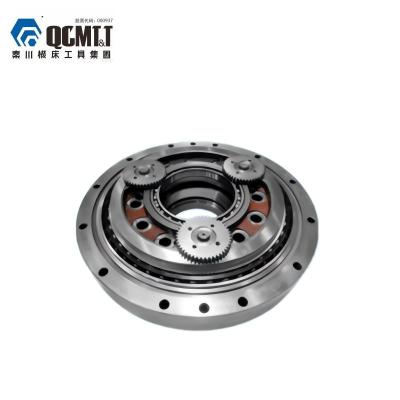
Qinchuan BX320CA Reducer
YDLIDAR TW3 LiDAR